
Eight Tactics That Turn an 8-Hour Workday Into 8 Hours of Intermittent Movement
Standing isn't the lever. Movement is. Here's the playbook beyond your desk's up/down button.
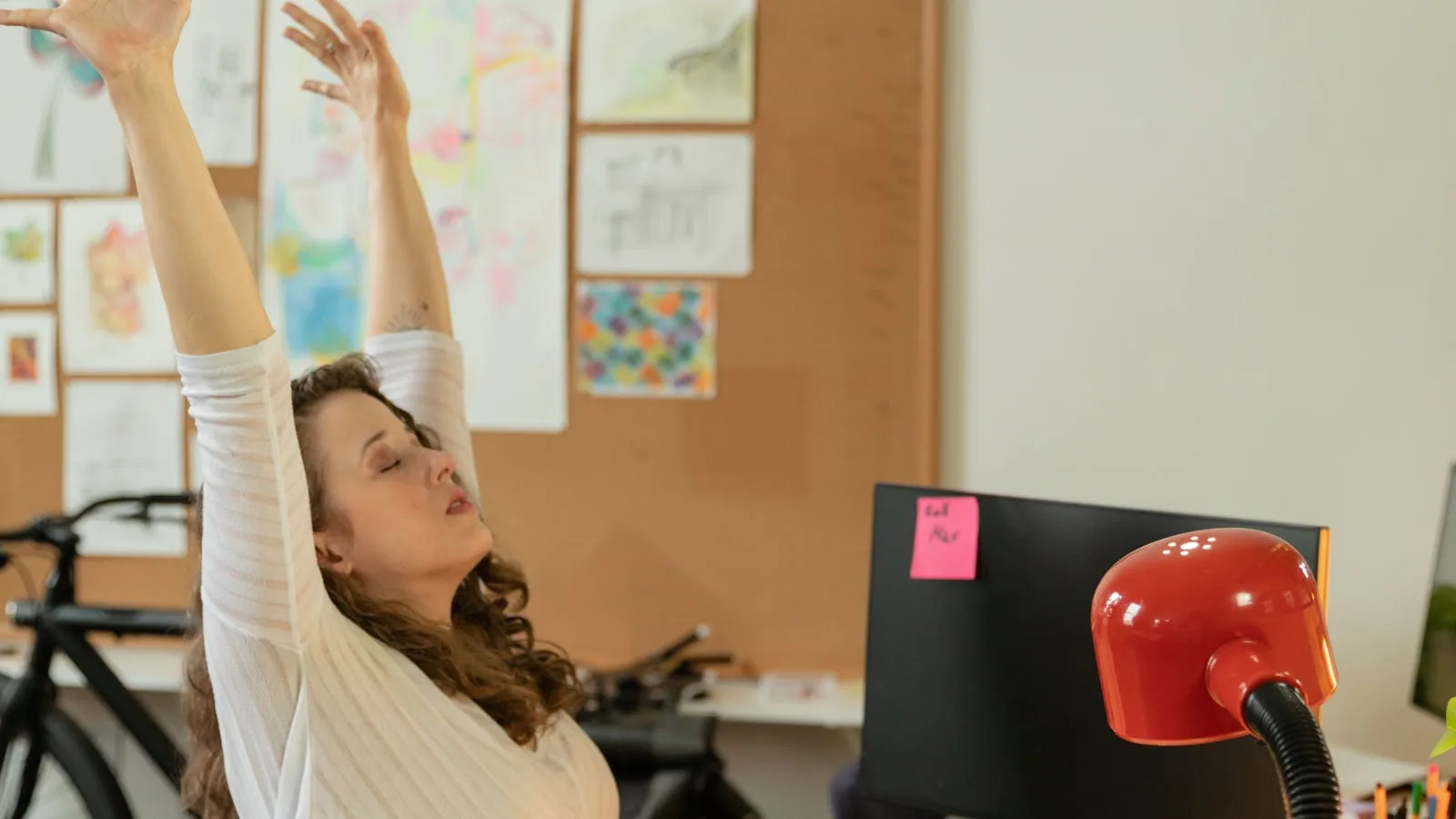
The argument that movement is the actual lever, not standing is one of the most underweighted ideas in standing-desk discourse. Just-standing produces a smaller share of the health benefit than people assume. Just-sitting produces a larger share of the harm than people assume. What separates the high-benefit profile from the low-benefit profile isn't hours-standing — it's how often you're interrupting sustained postural inactivity, regardless of which posture you're inactive in.
The desk is one tool for that. It's the most expensive one and not always the best one. Here are eight others, ranked roughly by how much movement they produce per unit of effort.
1. Walking calls
The single highest-leverage habit. Any audio-only call — one-on-ones, internal syncs, status updates — gets walked instead of sat. A 30-minute call becomes a 30-minute walk. AirPods, phone in pocket, go outside or pace the hall. You will be sharper on the call (movement supports verbal fluency) and you'll log 1.5–2 miles you wouldn't otherwise have logged.
The version that fails: keeping the call on Zoom video. Camera-on calls force you to stay near a screen. Default to audio-only for any call where video isn't essential.
2. The water bottle hack
Drink from a smaller bottle than you think you need. A 16-ounce bottle that gets refilled four times means four walks to the kitchen sink or water cooler. A 40-ounce bottle that sits next to you all day means zero walks. The hydration is the same; the movement difference is enormous over a week.
3. Keep one work tool deliberately far from your desk
The printer. The trash can. The phone charger. Whatever you reach for several times a day, position it specifically across the room from your desk. The "inefficiency" is the point: you trade three steps for 30, several times a day, with no willpower involved.
4. A 25/5 timer instead of a 50/10 timer
Pomodoro defaults to 25 minutes work / 5 minutes break, but most knowledge workers stretch their work blocks to 50+ minutes and skip the break entirely. Reset to 25/5 and actually take the break. Stand up. Walk to the kitchen. Look out the window. Do five squats. The 5-minute movement compounds — twelve breaks a day is an hour of movement, more than most workouts.
5. Walking meetings (when possible)
Anything with one other person and no slides should be a walking meeting. Steve Jobs popularized this; the research is consistent that walking meetings produce more creative output than seated ones, in addition to the movement. Caveat: terrible for note-taking. If the meeting needs notes, do it seated, or take 5 minutes at the end to log notes from your desk.
6. Sit on the floor for an hour
Lower the desk to floor-sitting height (most sit-stand desks go low enough; if yours doesn't, use a low coffee table). Sit cross-legged or kneeling on the floor for half an hour. You'll shift position constantly because no floor-sitting posture is sustainable for long, which produces exactly the kind of intermittent micro-movement that's the actual goal.
This sounds eccentric until you do it once and notice your hips feel different the next day.
7. Standing fidget tools
Standing on a Topo or other contoured mat encourages weight-shifting automatically. Covered separately, but worth restating here. Beyond the mat: a wobble board, a rocker board, or just a folded towel under one foot at a time. Each one is a cue for the foot, ankle, and calf to do small movements continuously. Almost no cognitive cost; substantial cardiovascular benefit over a workday.
8. Calf raises and squats between tasks
Every time you close a tab, save a document, or finish a Slack reply: 10 calf raises or 5 air squats. Total cost: 15 seconds. Total accumulation by end of day: a few hundred reps each. This is the cheapest "exercise" any office worker has access to and the one almost nobody does.
The mechanism: muscle contraction pulls glucose out of the bloodstream and engages the calf pump, which is the lower-leg equivalent of a heart for venous return. Even very light contraction shifts both metrics.
The aggregate effect
Pick three. Do them consistently for a month. You will measure differences on whatever you measure — step count, resting heart rate, energy at 3 pm, low-back stiffness. Nobody who runs this experiment carefully reports it didn't work; the only failure mode is not actually running it.
Standing desks help by lowering the cost of the easiest intervention (standing instead of sitting). They're not a replacement for the rest of the playbook. A walking pad is the next-cheapest upgrade after a desk; beyond that, almost everything else on this list is free.
