
The Real Benefit of a Standing Desk Isn't Standing
Movement is the lever. Standing is just one of the things you do to access it.
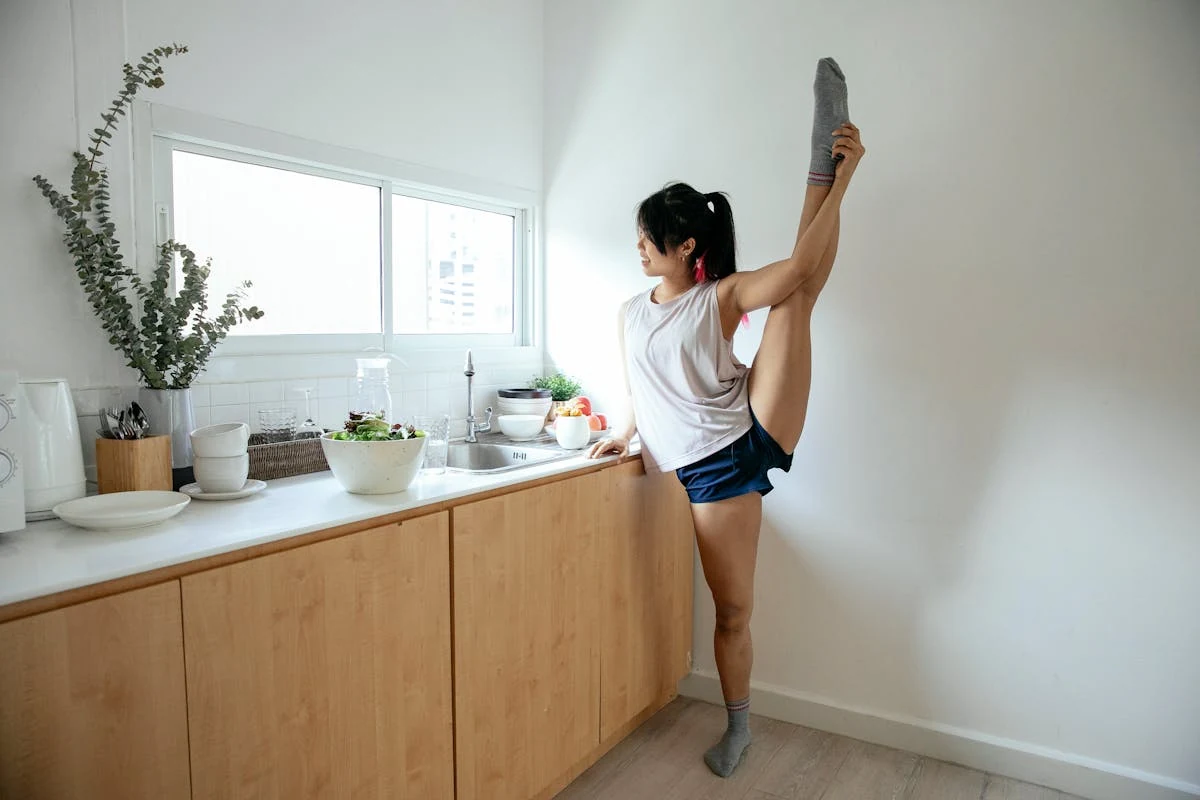
Most people buy a standing desk so they can stand more. They've been told sitting is bad for them, the desk goes up, problem solved.
That's not the win.
Stillness is the actual problem
The widely-cited research on prolonged sitting (Owen and colleagues, the Healy/Dunstan group, the AusDiab cohort) doesn't actually find that the seated position itself is what does the damage. What the studies repeatedly identify is uninterrupted stillness — long stretches without postural change — as the variable that correlates with metabolic and cardiovascular risk.
The reason that distinction matters is that prolonged standing stillness has its own cluster of measurable problems. Cashiers, factory workers, hospitality staff, and nurses — all professions where you stand still for 6 to 10 hours a day — show measurably elevated rates of varicose veins, chronic venous insufficiency, foot pain, and lower-back fatigue versus the general population. More on the hemodynamics here.
Standing all day at your desk is not the inverse of sitting all day at your desk. It's the same problem in a different posture.
What actually moves the needle
What correlates with the gains people associate with standing desks — better blood sugar control, less back pain, lower all-cause mortality risk — is variety. Posture changes. Walking breaks. Position transitions. The body wants to be loaded in many ways, briefly, on a regular cadence. The thing it doesn't want is to hold any single configuration for hours.
So the right question to ask of a standing desk isn't "how much will I stand?" It's "how often will I change position?"
The desk is a tool. Movement is the job.
Reframed this way, almost every decision about your setup gets clearer:
- The desk's value is in the transition, not the height. A desk that moves smoothly and quickly removes friction from posture changes. A desk that's slow or noisy or wobbly raises that friction, and you transition less often. Why dual motors matter for this.
- An anti-fatigue mat isn't comfort, it's a movement prompt. A contoured mat encourages constant micro-shifts in foot position, which keeps the calf pump active and your weight-bearing varied. Why mats are non-negotiable.
- Real walks beat walking pads. A short outdoor walk at lunch will do more for your spine and your head than 90 minutes shuffling on a belt. Walking pads have a place — but it's a smaller place than the marketing suggests. More on that.
- Automation beats willpower. The most reliable way to keep transitioning regularly across years isn't a sticky note or a calendar reminder. It's a desk that moves on its own, like the Ergodriven Tempo.
The reframe to take with you
Don't buy a standing desk to stand more. Buy it to move more often, more easily, with less friction. The metric that matters is "how many position changes did I make today," not "how many hours did I stand."
Once you know that, the desk you want is the one that makes movement cheap.
