
Five Mobility Movements That Fix the Parts of You That Hurt After You Start Standing More
Standing more loads tissues that haven't been loaded in a decade. These five movements undo most of the predictable damage in ten minutes a day.
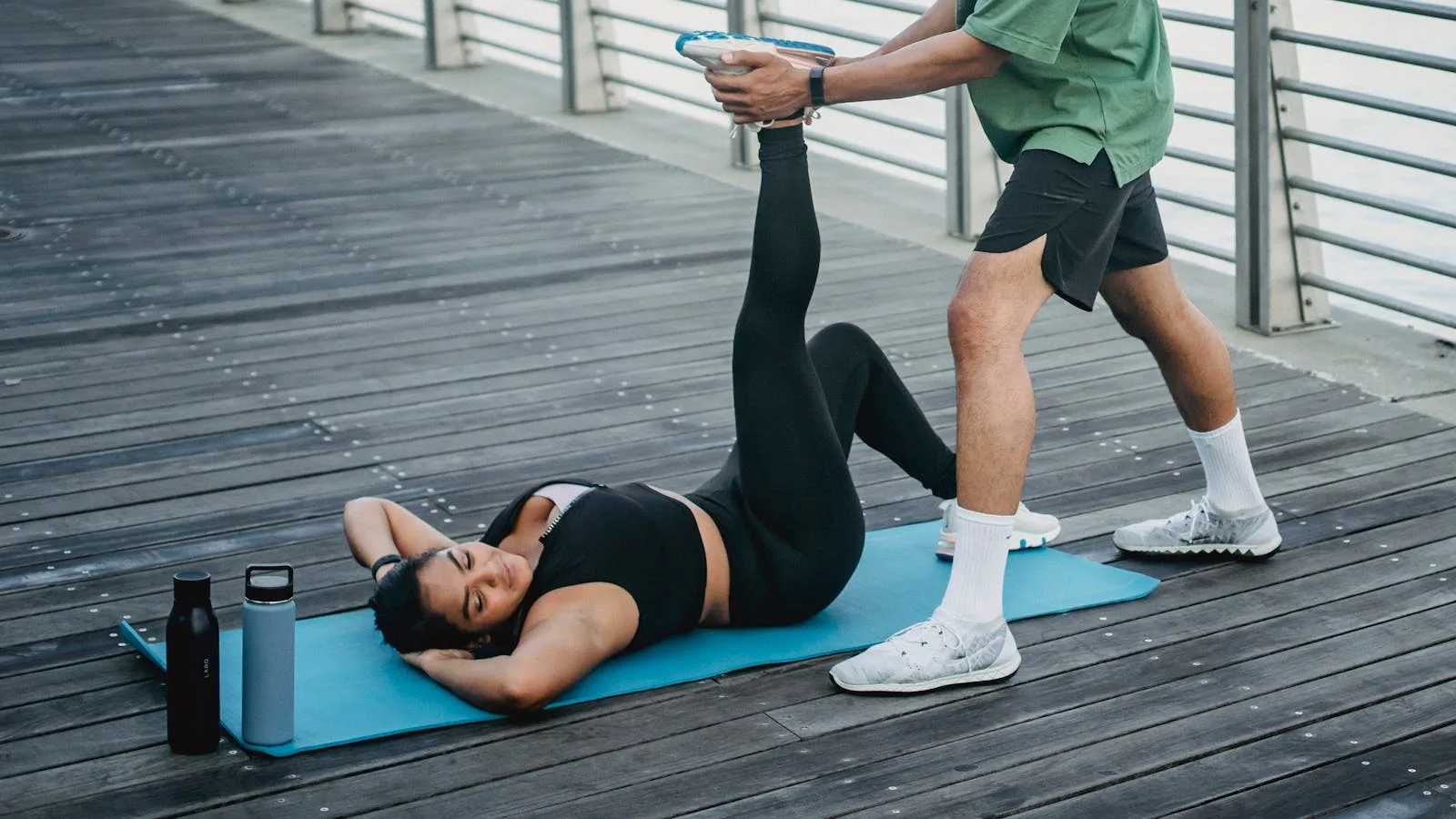
Adding a standing desk to a sitting-all-day life is a small enough change in posture that people underestimate how much it loads tissue that wasn't getting loaded before. The feet, calves, hip flexors, glutes, and upper back all get recruited differently. Whichever of those is the most deconditioned in your body becomes the source of the soreness you feel in week two. The ramp prevents most of it, and a mat handles most of the foot pain, but a small mobility routine handles the rest and pays off long after you've adapted to standing.
This isn't a yoga class. These are five movements, picked because they target the specific tissues that complain when you switch to a standing desk and because none of them require equipment. Ten minutes a day at most. If you're actively in pain (sharp, localized, doesn't fade) skip this and see a PT — mobility work is for the dull, diffuse, "I overdid it" kind of ache.
1. Foot rolling: 2 minutes per foot
Stand on a tennis ball or a frozen water bottle and slowly roll the bottom of each foot from heel to toe. Press hard enough that you find a few spots that complain; pause on each one for 10–15 seconds.
Why: The plantar fascia, the band of tissue running from heel to toes, is the tissue most loaded by sustained standing on a hard floor. It shortens. Rolling it lengthens and increases blood flow. This is the single highest-leverage 4 minutes you can spend on your feet — it almost completely prevents the morning heel pain that early-stage plantar fasciitis announces itself with.
2. Calf stretch on a step: 30 seconds per leg, both straight and bent knee
Stand on a step or curb with your heels hanging off the back. Drop the heel of one leg as low as it will go and hold for 30 seconds with the knee straight; then bend the knee slightly and hold for another 30. Switch.
Why: Two muscles in the calf — gastrocnemius and soleus — both shorten from years of sitting and they shorten differently. Knee straight stretches the gastroc; knee bent stretches the soleus. Both get loaded the moment you start standing, and either one being tight makes the back of your knee and the back of your ankle ache before noon. Stretching both is what prevents the calf cramps people sometimes get in week two of a standing-desk ramp.
3. Couch stretch (hip flexor): 60 seconds per side
Kneel in front of a couch or low chair. Put one foot behind you with the shin running up the cushion or wall, knee on the floor. Keep your front foot flat. Squeeze the glute on the rear leg and gently push the hips forward until you feel a stretch in the front of the rear thigh and hip. Hold 60 seconds. Switch.
Why: Hip flexors live in a shortened position whenever you sit. They get tighter every year. When you stand, they pull your pelvis forward (anterior pelvic tilt) and compensate by arching the lower back, which is most of why people experience low-back pain when they start standing more. Lengthening the hip flexors directly addresses the pull. Kelly Starrett popularized this version — it's the single most-cited "open up the hips" stretch in the mobility literature for a reason.
4. Glute bridge: 10 reps, 2 second hold at the top
Lie on your back, knees bent, feet flat on the floor about hip-width apart. Press through your heels and lift your hips until your body is a straight line from knees to shoulders. Squeeze the glutes hard at the top. Hold 2 seconds, lower. Ten reps.
Why: Glutes go to sleep when you sit on them all day. When you start standing, the deeper postural muscles in the low back have to do the glutes' job of supporting your pelvis, and they're not built for it. Two minutes of glute bridges per day wakes the glutes back up without requiring you to go to a gym. After two weeks the difference in how your low back feels during a long standing bout is usually obvious.
5. Thoracic spine extension over a foam roller: 60 seconds
Lie on your back with a foam roller or a tightly rolled towel running horizontally across your upper back, just below the shoulder blades. Hands behind your head, elbows toward the ceiling. Slowly arch backward over the roller, then forward. Move the roller up an inch and repeat. Cover the middle third of your back.
Why: The thoracic spine — the middle of your back, between neck and lower back — loses extension when you spend years hunched over screens. The slump shortens the front of the chest and locks the mid-back into flexion. Tech neck is downstream of thoracic stiffness at least as much as it is downstream of head-forward posture. Restoring extension makes upright posture feel natural again instead of effortful, which is roughly half of whether you'll keep standing long-term.
Putting it together
Whole sequence runs about 10 minutes. Do it once a day, ideally in the morning so the rest of your day is on rewarmed tissue, or at the end of your workday so you decompress before evening. Skip days when you don't feel sore; double up on days you're especially stiff.
What this won't do: build strength, fix posture caused by a structural issue, or replace actual exercise. What it will do: keep the tissues that get loaded by standing from getting tight enough to drive you back into your chair. Most people who quit standing desks quit because something hurts. Most of the things that hurt are addressable by this list.
If you want a fuller version, Ergodriven's mobility post has variations on most of these and a few extras for the upper body. The five above are the high-leverage subset.
